Pull up Greenwood on any national portal and the number that greets you is a citywide median. Movoto put the June 2026 median list price at $130,000 at roughly $71 per square foot. Redfin logged a November 2025 median sale of $172,000. Homes.com sits between them at $169,500. Those figures are accurate, and they are also averaging two markets that share a zip code but almost nothing else.
The house at 307 Grand Boulevard, a 1912 residence with 4,250 square feet, entered the market on January 5, 2026 at $545,000 and later carried a $697,500 asking price before going pending. It is a Powers Properties listing, one of several on and near the boulevard priced in a range the citywide median will not explain. The gap is not a rounding error. It is the whole story.
Two Sub-Markets Sharing One ZIP Code
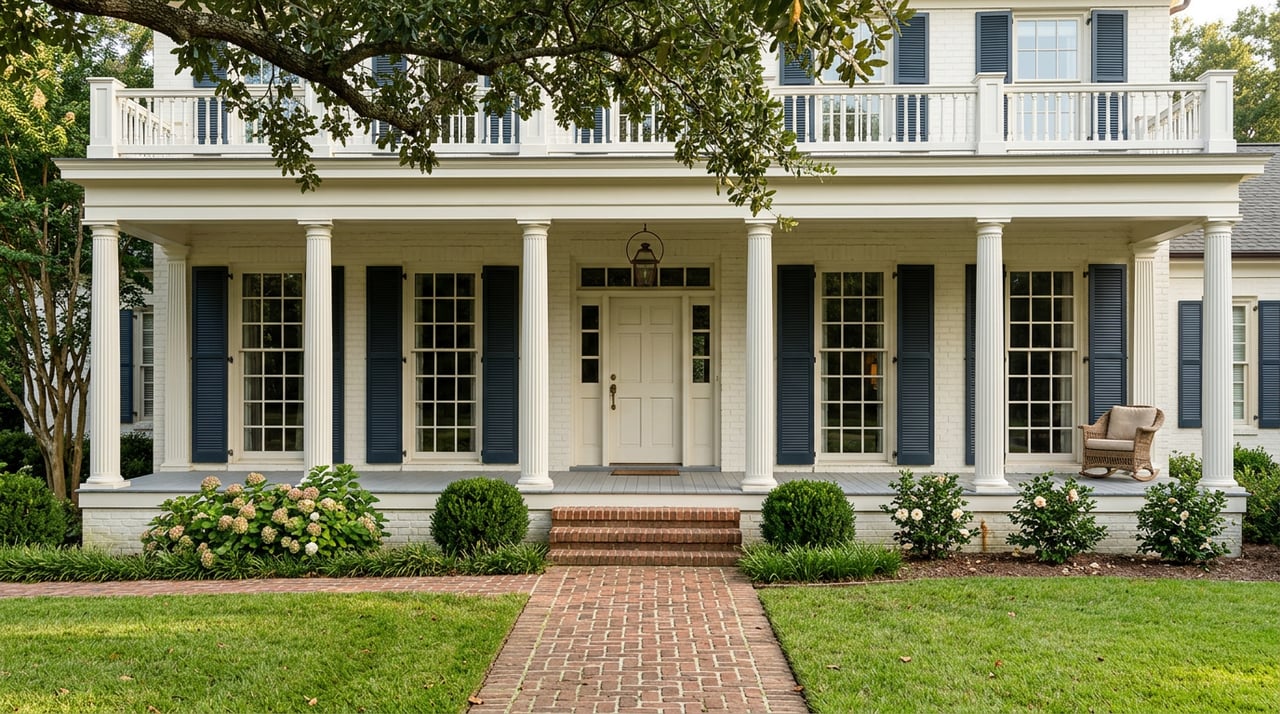
Grand Boulevard was laid out in the early twentieth century between the Yazoo and Tallahatchie Rivers, and Sally Humphreys Gwin oversaw the planting of the young oaks along it in 1916. What sits under those oaks now is a National Register historic district containing Neo-classical Revival, Tudor, Spanish Eclectic, and Prairie-style homes. The house at 319 Grand Boulevard, built in 1910 for the Provine family, is individually listed on the National Register, as is 1440 Grand Boulevard overlooking the Tallahatchie. The 1102 Grand Boulevard carriage house was rehabilitated using the federal preservation tax credit and now serves as corporate housing for Viking Range.
Compare that architectural inventory to the rest of the citywide sample. Recent MLS activity in the 38930 zip code includes homes like 615 Aubrey Circle South at $290,000, 513 Crockett Avenue at $249,000, and 208 East Adams at $285,000. Cottages, ranches, and small bungalows change hands in the low six figures. Neither pool is misrepresenting itself. They are simply two different products moving through the same statistical hopper.
| Segment | Typical 2026 asking price | Product |
|---|---|---|
| Citywide median | $130K to $172K | Cottages, ranches, bungalows |
| North Greenwood established | $249K to $290K | Updated ranches, cottages on quiet streets |
| Grand Boulevard historic | $475K to $697K+ | 1900s to 1920s architect-designed homes on large lots |
A buyer who reads the citywide number as the going rate for a Grand Boulevard address will misjudge every subsequent conversation. A buyer who reads the boulevard price without understanding what the state does with it will overpay for a turnkey elsewhere.
The Credit That Rewrites The Math
The friction and the opportunity that neither portal shows you sit inside the Mississippi Historic Preservation Tax Credit. Two credits stack on the same building. The federal program, administered through the National Park Service and the Mississippi Department of Archives and History, equals 20% of qualified rehabilitation expenses and is available only for income-producing properties. The state program equals 25% of qualified expenses and, unlike the federal, is available for owner-occupied dwellings. Qualified expenditures on an owner-occupied home must exceed $5,000 to trigger the state credit.
To qualify, the building has to be a certified historic structure, meaning it is either individually listed on the National Register or a contributing property in a district. Grand Boulevard clears that bar as a district. So does much of the historic housing north of the Yazoo along corridors like River Road. A cottage in a subdivision built in 1975 does not.
Here is what the arithmetic looks like on a plausible Grand Boulevard purchase.
- A buyer acquires a contributing 1920s home for $425,000 and budgets $175,000 for a certified rehabilitation of the kitchen, systems, roof, and porch, keeping character-defining features intact per the Secretary of the Interior's Standards.
- The rehabilitation is certified by the National Park Service and MDAH.
- The 25% Mississippi credit on $175,000 of qualifying spend equals $43,750 against Mississippi state income tax.
- Total effective outlay drops to roughly $556,250 for a home that would trade turnkey closer to $650,000 or $700,000.
That is the mechanism the median hides. On the boulevard, the "cheap" house is the one that needs work. On a subdivision street, the "cheap" house is the one that is already done, because no credit rides underneath it.
The Mississippi Heritage Trust reports the state credit program was reauthorized in 2020 with an additional $60 million and extended through 2030, and the previous $1 million threshold was removed so smaller residential projects could participate. That change matters more to a Grand Boulevard buyer than any move in the national mortgage rate this year.
What This Changes At The Closing Table
Reading the credit as free money is a mistake. It reshapes the transaction, and the friction shows up in three specific places a general agent will not always flag.
Sequencing before closing. The Part 1 application, which establishes that the building is a certified historic structure, can be filed concurrently with the National Register nomination if the property is not already listed. Buyers who plan to claim credits should coordinate the Part 1 with MDAH before rehabilitation begins, because expenses incurred before certification is on file complicate the paperwork. The IRS allows a taxpayer to claim the credit before receiving final NPS certification if the Part 1 was submitted in good faith, but that is not a corner most closing attorneys handle every week.
The five-year holding rule. The federal credit is recaptured 100% if the building is sold within one year of being placed in service, and the recapture drops by 20% each additional year. A buyer treating a rehabilitated Grand Boulevard home as a three-year hold will hand a meaningful piece of the credit back. Sellers who financed part of a renovation with the credit and now want to move within five years should model the recapture into their listing price rather than discover it in escrow.
Qualified expense scope. The Standards for Rehabilitation are literal. Enlarging the footprint, adding new construction, or replacing character-defining features with modern substitutes will bounce items out of the qualifying pool. A veteran preservation contractor and an architect who has read the Standards recently will save more money than any concession negotiated at inspection. Powers Properties keeps a vendor bench for exactly this reason, since a boulevard closing lives or dies on the sequencing of MDAH, the contractor, and the lender.
The other transactional wrinkle worth naming is appraisal. A rehabilitated 1912 residence with 4,250 square feet and a screened porch overlooking the boulevard has few directly comparable sales in a given year. Appraisers on these properties often pull comps from the same district over a longer look-back window or from other Delta historic markets. Financing timelines run longer as a result. Cash buyers and portfolio-lender buyers move faster than conforming-loan buyers on this street, which occasionally decides who wins a well-priced listing.
Reading The Median Correctly
The citywide median is a real number. It is also a blended number, and the blend is dominated by cottage and ranch stock that has nothing structurally in common with the National Register housing between the two rivers. When a buyer asks whether Greenwood is a $130,000 market or a $600,000 market, the correct answer is that it is both, on the same afternoon, sometimes on the same block. The price on the boulevard is not a premium for the address alone. It is what the district's architecture, lot sizes, and access to state and federal preservation credits produce when they are priced together.
The Alluvian, Fan and Johnny's, the Museum of the Mississippi Delta, and the Viking Cooking School are the amenities the boulevard shares with the rest of downtown. The credit stack is what it does not share.
FAQ
Does the state credit apply if I do the work myself? The credit follows qualifying expenditures, not labor arrangements. Materials and contracted labor count. Sweat equity does not translate into a credit. Documentation of every qualifying expense is required for MDAH review.
Can I use the credit against a mortgage payment? No. The credit reduces Mississippi income tax owed. It affects your annual tax bill, not your monthly principal and interest. Lenders will still qualify you against the full purchase price.
Is Grand Boulevard the only Greenwood corridor where this works? No. Any building that is either individually listed on the National Register or a contributing property in a listed historic district can qualify. Portions of Greenwood outside Grand Boulevard include National Register resources. A preliminary determination from MDAH answers the question in writing before you rely on it.
If you are comparing Greenwood against the median on a screen and wondering whether the boulevard math actually works, that conversation is what we do. Contact a Greenwood real estate expert at Powers Properties and we will walk the numbers, the district lines, and the MDAH sequencing together before you write an offer.